

Dogs may not speak our language, but they are constantly communicating with us. One of the most expressive parts of a dog’s body is their tail. Many people assume a wagging tail always means a happy dog, but that’s not always true. Tail position, speed, and movement all work together to communicate how your dog is feeling. Learning to read your dog’s tail can help you better understand their emotions, prevent behavior issues, and strengthen your relationship.
Why Tail Position Matters
A dog’s tail is an important part of their body language and communication. Dogs use their tails to signal confidence, curiosity, fear, excitement, or stress. However, tail position should always be read along with the dog’s overall body language, including ears, posture, and facial expression. Understanding tail signals can help you recognize when your dog is relaxed, anxious, or uncomfortable before behavior problems develop.
Common Dog Tail Positions
- Tail Held High: When a dog holds their tail high, it usually means they are alert, confident, or excited. A high tail may also indicate dominance or strong interest in something nearby. If the tail is high and stiff, it may signal tension or a potential aggressive response, especially if the body is rigid.
- Tail Held Straight Out: A tail that sticks straight out behind the dog usually means curiosity or focus. Your dog is paying attention to something and trying to decide how to react. This is common when dogs encounter something new or unfamiliar.
- Relaxed Tail: A relaxed tail in a natural position for the breed typically means your dog is calm and comfortable. This is the position you’ll see when your dog is relaxed at home or calmly exploring their environment.
- Tail Low: A low tail can indicate that a dog is unsure, nervous, or submissive. It may also appear when a dog is tired or relaxed, so context matters.
- Tail Tucked Between Legs: This is one of the easiest signals to recognize. A tucked tail usually means fear, anxiety, or stress. Dogs may tuck their tails when they feel threatened, uncomfortable, or overwhelmed.
Tail Wagging Doesn’t Always Mean They’re Happy
A full-body wag, where the dog’s entire body moves, usually indicates a very happy and friendly dog. However, many people believe a wagging tail always means that their dog’s happy, but that’s not true. The speed and direction of the wag also matters, for example:
- Fast, Loose Wag: Excitement or happiness
- Slow Wag: Uncertainty or insecurity
- Short, Quick Wag: Cautious greeting
- Tail Wagging to the Right: Positive emotions
- Tail Wagging to the Left: Stress or uncertainty
Understanding Tail Position Helps Prevent Behavior Problems
Many behavior issues happen because owners misread their dog’s body language. For example, a dog with a stiff, high tail and slow wag may not want to be approached, even though the tail is moving. Recognizing stress signals early can help prevent barking, chewing, aggression, and anxiety-related behaviors. The more you understand your dog’s body language, the easier it becomes to respond appropriately and help them feel safe and confident.
Support Your Dog’s Behavior Naturally
If your dog struggles with anxiety, stress, excessive barking, chewing, or other behavior challenges, supporting their emotional health is just as important as training. Dr. Bill’s Canine Behavior Support is designed to help dogs stay calm, relaxed, and improves their ability to handle everyday stressors like travel, training, separation, and new environments. Dr. Bill’s natural formula supports calm behavior and can make training and behavioral improvements easier for both dogs and their owners.
If your dog struggles with stress, anxiety, or behavior challenges, consider trying Dr. Bill’s Canine Behavior Support to help them feel calmer, more balanced, and easier to train.
Recommended products
-
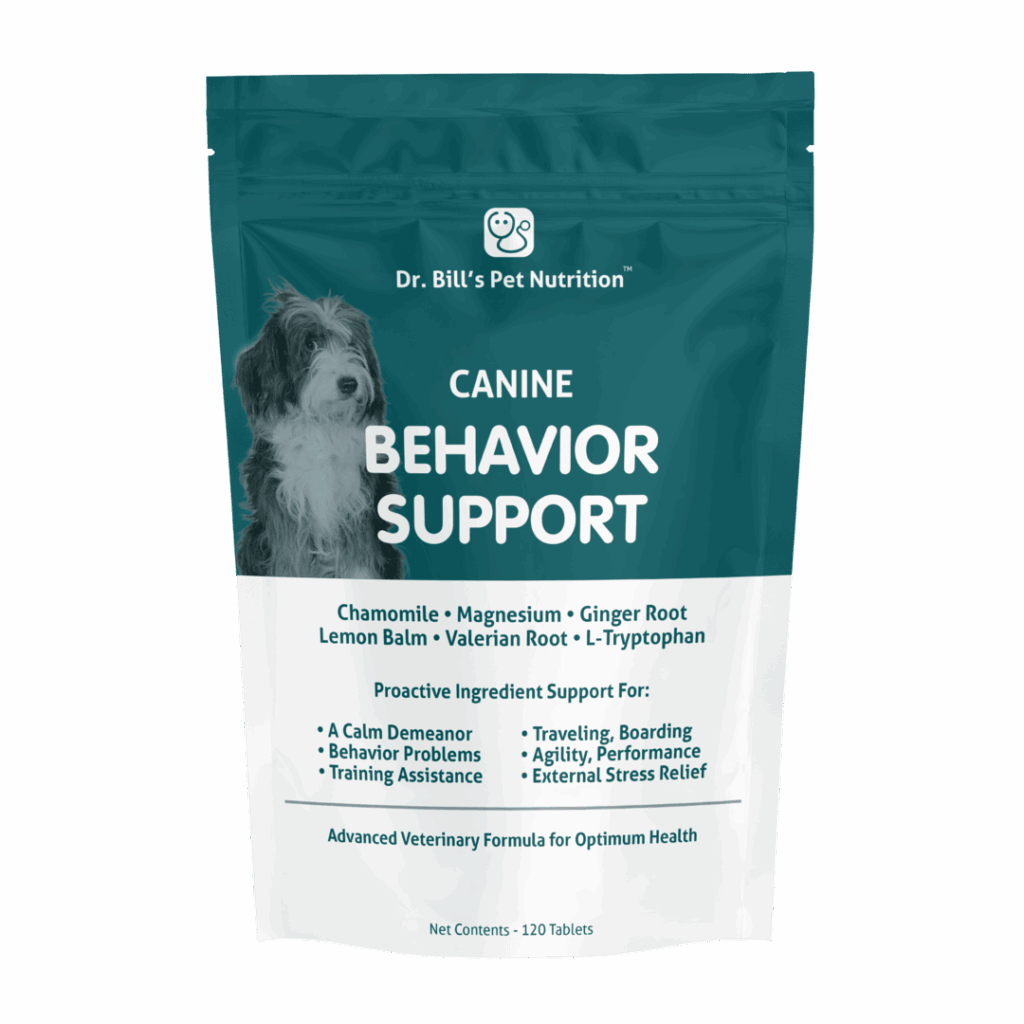
Canine Behavior Support
$24.99 — or subscribe to save 10% -

Canine Ultimate Fitness & Health
Price range: $39.99 through $69.99 — or subscribe to save 10% -
Canine Cognitive Support
$44.99 — or subscribe to save 10%









0 Comments